A Red Card on Probation: When American Exceptionalism Walked Onto the World Cup Pitch
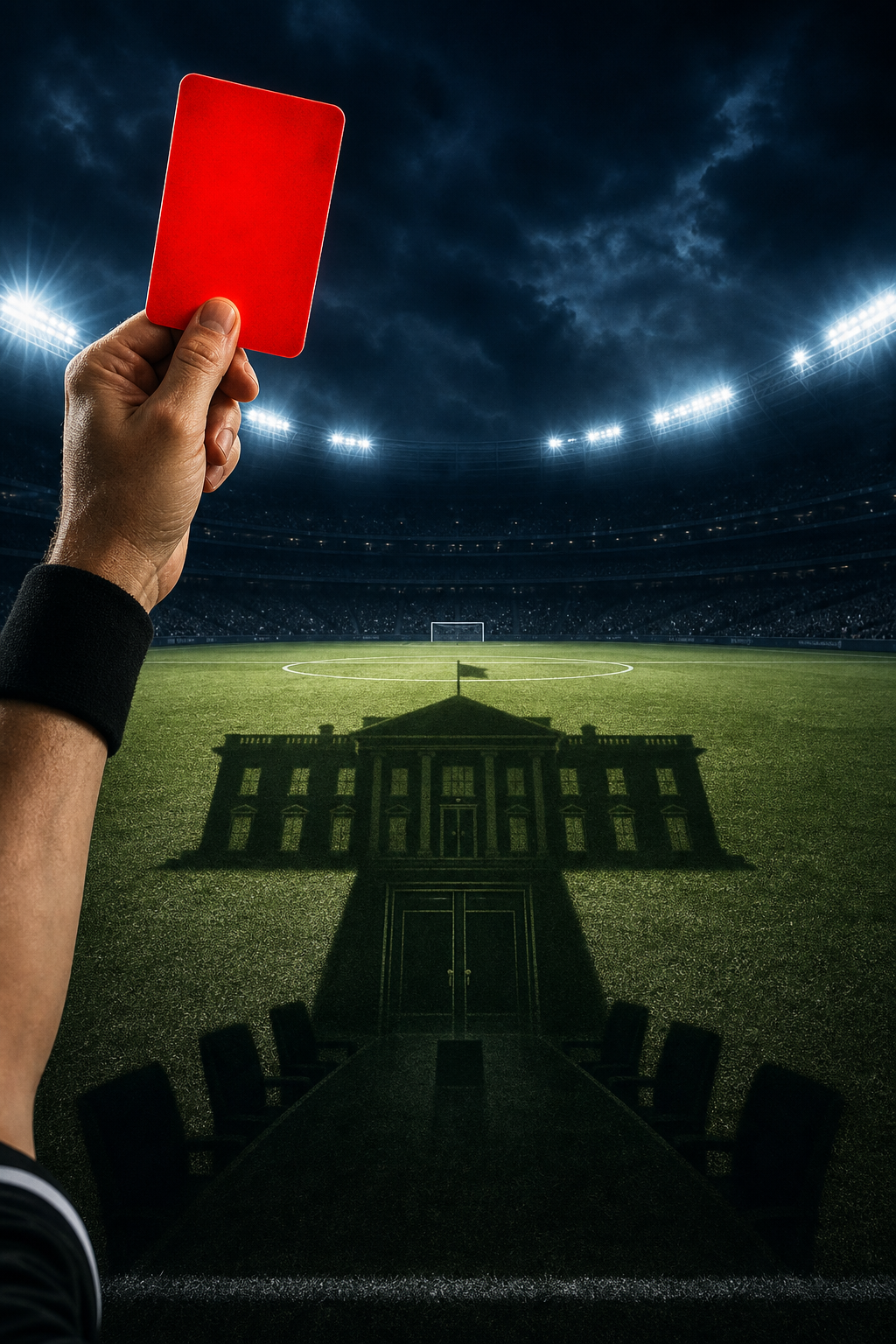
Folarin Balogun’s reprieve is not just a refereeing footnote. It asks a colder question: why did a red card suddenly find a one-year probation door when the host nation needed it most?
A Red Card on Probation: When American Exceptionalism Walked Onto the World Cup Pitch
On July 5, the strangest sentence in the World Cup was not about tactics, injuries, or Belgium’s pressing shape. It was this: FIFA had suspended the implementation of Folarin Balogun’s automatic one-match ban for a probationary period of one year.
Plain English: the red card still existed, the suspension was still imposed, but the punishment would not be served now. The U.S. striker could play Belgium in the round of 16.
In a friendly, that would already raise eyebrows. In a World Cup knockout match, involving the host nation, after reports that the White House had called FIFA president Gianni Infantino, it becomes something else.
The core story checks out
The Chinese WeChat article that triggered this piece said Balogun was sent off in the United States’ 2-0 win over Bosnia and Herzegovina, then had his one-match suspension deferred for a year, making him eligible against Belgium.
That is not a rumor. Xinhua reported from Seattle that FIFA imposed a one-match ban on Balogun and suspended its implementation for one year. ESPN quoted FIFA’s statement: “By operation of Article 27 FDC, the implementation of the automatic match suspension for USA player Folarin Balogun is suspended for a probationary period of one [1] year.” ABC News reported, citing sources familiar with the situation, that President Donald Trump called Infantino and asked FIFA to review the red-card suspension.
Belgium’s federation reacted with open shock. Its argument was simple: the FIFA World Cup 2026 regulations say, in Article 10.5, that if a player or team official is sent off as a result of a direct or indirect red card, they are automatically suspended from their team’s next match.
So yes, the news is real. The harder question is what kind of reality it reveals.
FIFA did have a legal handle. That is exactly the problem.
Article 27 of the FIFA Disciplinary Code does allow FIFA’s judicial body to fully or partially suspend the implementation of a disciplinary measure. It also sets a probationary period of one to four years. If the sanctioned person commits a similar infringement during that period, the suspension is revoked and the original sanction is enforced, without prejudice to any additional sanction.
So this was not magic. FIFA found a clause.
But serious institutions are not judged only by whether a clause can be found. They are judged by when it is used, for whom it is used, how transparently it is used, and whether the same door would open for everyone else.
That is where the Balogun decision falls apart.
The tournament regulations speak in hard language: a red card means the next match is missed. ESPN had also reported that FIFA previously confirmed there was no route to appeal the red card, because the VAR review was treated as the review. The original football logic was clear: controversial or not, Balogun was out.
Then the door opened.
Not because FIFA publicly admitted a VAR-process failure. Not because it published a detailed review explaining why the referee’s red card was wrong. The door opened through a broad disciplinary clause normally buried far away from the simple promise fans understand: red means off, and red means you miss the next game.
Is this the first case in football history? No. Is it still extraordinary? Yes.
It would be sloppy to call this the first such case in FIFA history. ESPN has pointed to recent precedents: Cristiano Ronaldo had the final two games of a three-match ban deferred after a red card in a World Cup qualifier; Nicolás Otamendi and Moisés Caicedo also had qualifier-related bans deferred before the World Cup.
But qualifiers are not the World Cup knockout stage. A carried-over ban before the tournament is not the same as an automatic suspension inside the tournament being paused just before a round-of-16 match.
That is why this feels different. The timing is too perfect. The beneficiary is the host nation. The player is the host nation’s leading scorer. Belgium had been preparing for his absence. ABC reported a Trump call to Infantino. Trump then thanked FIFA for “reversing a great injustice.” FIFA offered Article 27, but not enough daylight.
Each fact can be explained. Together, they create the smell of power.
The modern double standard rarely says, “Rules do not apply to us.”
The old version of exceptionalism is crude: I am powerful, so I ignore the rules.
The modern version is better dressed. It keeps the rulebook on the table. It quotes the correct article. It wraps an exception in procedure. It insists everything is legal, then hopes nobody asks why the same legal creativity almost never appears for weaker teams at the decisive hour.
That is the sharper point here. Balogun himself may well believe he was wronged. Many people thought the red card was harsh. Some refereeing analysis argued the VAR process leaned too heavily on slow-motion and still images instead of real-time footage.
Fine. If FIFA believes the VAR process failed, say so. Publish the review. Explain the error. Create a remedy that every team can use.
What FIFA should not do is leave the red card standing, leave the ban technically imposed, and then quietly suspend the punishment in a way that looks tailor-made for a politically powerful host.
This is how double standards travel. They start in geopolitics, trade, finance, technology sanctions, and international institutions. Then they reach places that people used to treat as separate: sport, culture, refereeing, the little rituals that make a game feel fair.
The damage is not just Belgium’s problem
Belgium coach Rudi Garcia said he thought July 5 had somehow become April Fools’ Day. Norway coach Ståle Solbakken asked the obvious question: what happens if Balogun scores the winner? What happens with the next red card?
Those are not emotional complaints. They go to the foundation of competition.
Football does not survive because every call is perfect. It survives because everyone believes bad calls are borne under the same system. Once “who gets relief” starts to depend on visibility, politics, or proximity to power, the match stops being only a match.
FIFA may think it corrected one controversial red card. What it actually did was create a larger controversy around its own credibility.
If the red card was wrong, overturn it openly. If the red card was right, enforce the suspension. Do not keep the card, keep the ban, delay the punishment, cite a general clause, and expect the world to call that clarity.
The World Cup sells a simple dream: for 90 minutes, big countries and small countries stand on the same grass. After Balogun’s suspended suspension, that slogan still looks good on a poster. But fans will remember the loophole. Some teams face the rulebook. Others seem to know where the back door is.
Sources
- CCTV / WeChat: “前所未见!美国队员红牌停赛被暂缓执行”
- Xinhua: Balogun’s one-match ban suspended, U.S. striker eligible for Belgium
- ESPN: “USMNT's Balogun has red card suspended; Trump asked FIFA to review”
- ABC News: “Trump asked FIFA to review US World Cup star Folarin Balogun's red card ban”
- FIFA Disciplinary Code 2025, Article 27
- FIFA World Cup 26 Regulations, Article 10.5
Comments
0 public responses
All visitors can read comments. Sign in to join the discussion.
Log in to comment