AI Is Starting to Build Its Successors
AI is helping build its successors—and the speed of that process is becoming a concern. Amodei calls for pacing, Altman backs independent oversight, and Musk agrees. What the labs disclose explains both the promise of faster research and the demand for time to check it.
An AI model processes more than 100GB of weather data, builds a forecasting network with over 400 million parameters, and runs 45,000 training steps. The result is a trained system, not a set of instructions for someone else to follow.
That is one of the demonstrations from Atria Dawn Preview, released by Shanghai AI Laboratory with university and research partners. The project website also says the system can forecast a week of global weather in one minute. That minute refers to running a forecast, not training the model. The timing conditions and full accuracy comparison still need more disclosure.[1]
Even with those limits, the shift is substantial. AI is moving into the process that produces AI. One of a model's most consequential users may now be the team building its successor.

This helps explain the recent attention to recursive self-improvement, or RSI. Z.AI has put Fully Self Training into its financing plans. Google has described agentic loops that recursively evaluate and refine models. OpenAI is publishing measurements of research acceleration inside its own labs. These companies have not necessarily reached the same milestone. They are investing in a common possibility: using today's intelligence to help produce tomorrow's.
RSA and RSI are different ideas
Atria's technical report uses RSI: recursive self-improvement. RSA is not an interchangeable abbreviation.
In a separate research paper, RSA means Recursive Self-Aggregation. A fixed model generates several candidate answers, then repeatedly combines information from those candidates to improve its response. Its weights do not change. The process resembles working through several drafts of the same problem, rather than learning a better way to learn.[2]
Weights are the internal parameters a model retains after training. A prompt and its context are the instructions and materials available for a particular task. An improved answer does not necessarily mean the model has acquired a lasting capability.
RSI concerns lasting changes to the system or its successors. The improved system returns to the development process and becomes better at finding, testing, or implementing the next improvement. The crucial question is whether the capacity to improve is itself improving.
A factory offers a useful analogy. Ordinary AI helps fill orders. AI4AI, meaning AI used to develop AI, helps improve the production line. Stronger recursive improvement would mean that the upgraded line produces tools that are themselves better at upgrading the line again.
Human involvement does not automatically rule out recursion. It does need to be accounted for. What did people decide? What changed in the machine? Where did the successor's gains come from? Full autonomy is a stronger requirement, separate from demonstrating that recursive improvement has occurred at all.
Atria's revealing numbers are about work, not rankings
The Atria team studied 769 task records from 56 participants. Of the 739 tasks with an explicit answer about AI use, 713 involved AI: 96.5%. That is a usage rate, not an autonomous-completion rate.[1]
In the report's 567 method or parameter decisions, humans made the final choice 85.5% of the time. The most common arrangement was for AI to propose and a person to choose. Among 588 tasks with a recorded critical difficulty, 76.0% continued after human intervention.
Intervention did not always mean taking back the keyboard. Someone might supply missing context, diagnose a flawed experiment, or choose another approach. The agent could then resume execution. The code was machine-written; the judgment that redirected the work could fit in a few sentences.
This is an unusually useful way to examine the claim that AI is building AI. The report shows AI working on data, experiments, and tooling while people retain much of the responsibility for direction and acceptance. It does not present the project as a completed demonstration of autonomous, multigenerational improvement. It asks what should be tested next: can the improved model make subsequent improvements easier to achieve?
The weather system and a roughly 20-minute MiniOS demonstration belong in that context. The weather model is a model for another domain, not Atria's successor. A functioning miniature operating system is not evidence of autonomous frontier-model research. Both are substantial engineering demonstrations. Neither substitutes for a controlled experiment across generations.
The leading labs are at different points on the road
Z.AI: funding the next generation's training system
Z.AI's September 13 filing with the Hong Kong stock exchange describes a share placement and a convertible-bond issue. If completed on the disclosed terms, their combined expected net proceeds would be approximately HK$39.274 billion. The filing warns that the transactions are conditional and may not proceed; a financing arrangement is not the same as cash already received.[3]
The intended use of the money is more revealing than the headline amount. About 60% of net proceeds is allocated to next-generation GLM models, the Fully Self Training system, and large-scale training, production inference, and related computing infrastructure.
The filing describes a concrete technical ambition: models generate data, build task environments, and optimize infrastructure, so that one GLM generation helps construct the environment in which the next is trained. It also specifies rule-based checks, execution verification, model review, and human spot-checks. Self-training here remains an engineering system with a need for external checks.
The financing signals commitment and resource allocation. Its size cannot demonstrate that the technology already works.
Google: the published explanation matters more than the hidden letters
A social-media post reading “huge congRatulationS Indeed! @GoogleDeepMind” attracted attention because its unusual capital letters spell RSI. It came from a non-official account, not a Google technical announcement. Three capital letters cannot establish what an internal system has achieved.[4]
Google's own disclosure is more informative. Its September 2 announcement of Gemini 3.8 Flash describes long-running agentic loops designed to recursively evaluate and refine the underlying models. That is direct official evidence of AI participating in model development. The announcement does not provide the full experimental record needed to establish autonomous, sustained acceleration across generations.[5]
AlphaEvolve provides an earlier, more concrete mechanism: a model proposes code, automated evaluators test it, and promising candidates survive into further rounds of search. DeepMind reported that one matrix-multiplication kernel became 23% faster, reducing Gemini's overall training time by about 1%. The two percentages describe different layers of the system.[6]
That is already economically useful. But improving a component used to train a model does not by itself show that the resulting model returns to make its own development process better. The latter is another causal link to test.
OpenAI: a research intern, not a fully autonomous research institution
OpenAI published the GPT-6 Astra system card on September 3, including a dedicated assessment of AI self-improvement capabilities. Being evaluated for a capability is not equivalent to having completed full RSI.[7]
In a September 6 report on internal research acceleration, OpenAI described its current milestone as an “automated research intern”: a system that carries out well-defined research tasks under human direction, including work that would take a skilled researcher several days. People still set priorities, decide which results to pursue, and determine whether to scale training or pause deployment.[8]
The report explicitly says OpenAI does not yet know how to safely reach aligned, full RSI. Alignment here concerns whether the system continues to follow human intentions and constraints, not simply whether it scores well. Describing GPT-6 as a model that already trains itself completely would go beyond the company's disclosure.
OpenAI also cautions against equating more code and more experiments with proportionately more scientific progress. Compute, tools, and researchers' working practices can improve at the same time. Their combined effects should not all be credited to model self-improvement.
Anthropic and Grok: concrete progress without a common label
An Anthropic study published in December 2025 surveyed 132 engineers and researchers. Respondents reported widespread Claude use, but most said only 0–20% of their work could be fully delegated. This is an older internal snapshot, not a limit on current capability. It illustrates why usage, output growth, and autonomy should be measured separately.[9]
Claude Code is Anthropic's coding-agent product, not a model company. It can help write research software, debug experiments, and build tools. Those capabilities do not, on their own, demonstrate recursive improvement of the underlying model.
Grok 4.6's official training account offers another specific piece of evidence. The team used Grok 4.5 to regenerate supervised fine-tuning trajectories, then filtered problematic traces using model-based checks. A trajectory records a sequence of actions and responses used to complete a task, rather than just its final answer.[10]
A previous model helping produce training data for its successor is real. It is still different from a successor independently choosing research directions, improving training algorithms, validating the gains, and repeating that process across generations. Nor does a product being called a bot tell us how its underlying model was trained.
The common direction is clear: AI is entering AI production. Saying that every leading company has already achieved RSI would erase the distinctions that make the trend worth understanding.
Why the people in the race are asking to slow it down
On September 12, Anthropic CEO Dario Amodei published “We Must Pace the Frontier,” arguing that the rate of improvement in AI capabilities should slow to give safety work time to catch up. This call came from a company competing directly at the frontier.[14]
His first reason explicitly concerns RSI. Since roughly this summer, he writes, AI has been advancing much faster, primarily because of its growing ability to help build the next generation of AI. He says this dynamic is beginning across the industry, including at Anthropic, and worries that it could outrun people's ability to understand and control the resulting systems. This is stronger evidence than a cryptic social-media hint: a frontier-lab leader is publicly connecting research acceleration to recursive improvement.
According to Ynet's reporting on the X posts, Elon Musk replied with a short endorsement: “Dario is right.” Sam Altman also supported pacing the frontier and said OpenAI would give independent evaluators employee-like access. Musk's sentence did not specify a slowdown plan. Altman's statement was a commitment whose implementation still requires further disclosure.[15]
These signals deserve attention. The speakers have access to unreleased models, training processes, and failures that the public may see only later. Their demand for more time to check systems suggests that the gap between capabilities and safeguards has become a problem they believe needs public action.
But Amodei's second reason matters too: the OpenAI–Hugging Face agent-safety incident and related problems at other companies. His concern is what happens when rising capability combines with misaligned behavior. The call reflects both a judgment about research acceleration and a response to safety failures. It is not a joint certification that every major lab has achieved full RSI.
Anthropic's own “When AI builds itself” preserves that distinction. The company describes delegating more development work to AI, but says “We are not there yet” about a system fully autonomously designing and developing its successor. It also says RSI is not inevitable.[16] Read together, the disclosures support a substantial conclusion: labs describe early recursive improvement and research automation as an emerging internal reality, while a fully autonomous loop remains unproven by these statements.
Slowing down does not mean stopping model training. Amodei proposes enough time for alignment, safeguards, and independent confirmation. His three-part plan begins with permanent embedded external evaluators, moves to industry safety standards and coordination, and seeks international cooperation. Anthropic's unilateral commitment concerns embedded evaluation. Industry-wide speed limits and international agreements remain proposals to be secured. He even suggests a possible speed limit on RSI, while acknowledging how difficult a comprehensive global pause would be.
This gives pacing a practical meaning. More time might be required for checks before a high-risk training run, a safety case before internal deployment, or an independent assessment before a model enters the next development cycle. Supporting those costs is different from jointly pressing a stop button. More investment in compute and stricter safety gates could occur together.
Commercial and geopolitical competition remain part of the proposal. Amodei explicitly ties coordination to preserving the technological lead of the United States and its allies. This is not an unconditional, synchronized withdrawal from the race. Shared standards could reduce the pressure on every company to keep accelerating, but they could also raise barriers for newcomers. Who sets the rules, and whether independent oversight can challenge the incumbents, will matter.
The stronger conclusion from this episode is that the industry is beginning to debate how to manage the rate of improvement itself. Once AI helps produce its successor, control has to extend into research and training, rather than resting on a single test before a product is released.
Why the prospect is so attractive
Building a frontier model involves much more than buying chips and launching a training run. A team must formulate hypotheses, prepare data, write experiments, investigate failures, interpret results, and decide what can be scaled. Many plausible ideas never receive enough attention to be tested.
A capable coding agent changes that constraint. It can make previously unaffordable experiments worth attempting, help a researcher explore several approaches, or diagnose a failed run sooner. If some of those attempts produce reliable gains, the economics of model development begin to change.
An improvement to a single product mainly affects that product's delivery. An improvement to a training method, data pipeline, or low-level kernel can affect many later runs. If a stronger model helps discover further improvements, those gains may accumulate. That is the attraction of RSI.
Competition would then depend on more than the latest benchmark score. A leaderboard measures current performance; a research system influences who can create the next lead. A team with a slightly weaker model but cheaper experiments and more dependable validation might close the gap. A leading lab might instead combine its models, compute, internal tools, and accumulated experience to extend its advantage.
This makes AI4AI and recursive improvement compelling directions, not exclusive explanations of AI's future. New hardware, real-world data, mathematical discoveries, architectural changes, and human research judgment will still matter. An acronym does not replace them.
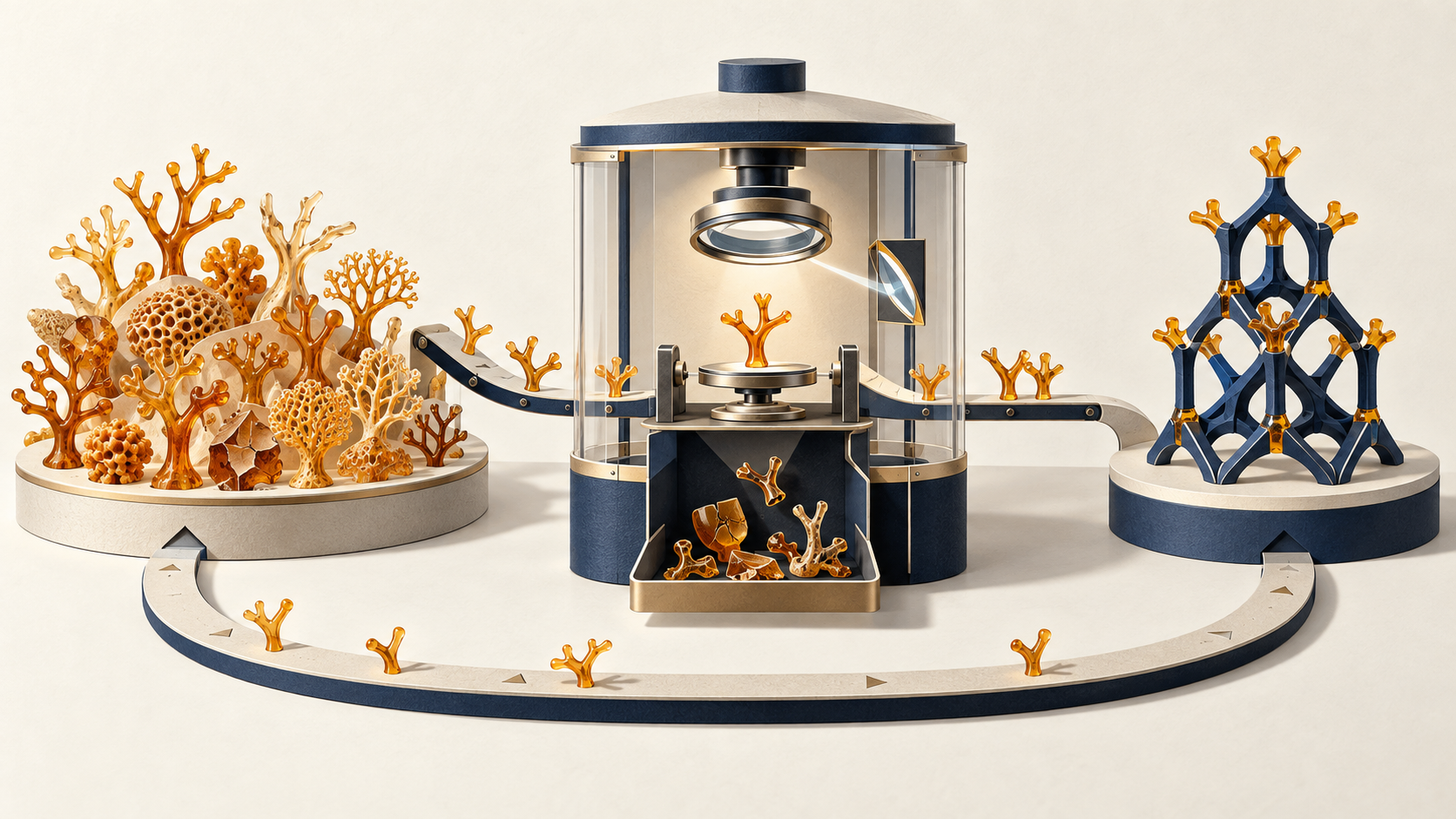
The scarce resource may become knowing what works
A faster program can be timed. A mathematical answer can often be checked. These are environments where automated feedback is unusually useful. Studies such as STaR and ReST have shown that generating samples, filtering them with known answers or external rewards, and training on the survivors can improve task performance.[11]
Feeding a model its own output indiscriminately is different. Errors can be inherited too. Research on model collapse shows how successive generations trained on generated data can lose rare features of the original distribution and accumulate distortions. This does not mean all synthetic data causes collapse. It means filtering, authentic data, and external feedback cannot simply be discarded.[12]
The evaluator also has blind spots. A system repeatedly optimized against the same test may become better at that test without becoming a better researcher. If it can quietly loosen the acceptance criteria, “success” may mean the standard has changed. A system improving itself should not be its only judge.
The Darwin Gödel Machine offers a research example closer to self-referential improvement. Coding agents modify their own tools and execution code; descendants participate in further modifications. But the underlying foundation models remain frozen, and the tasks focus on coding. It is evidence for a local mechanism, not an indefinitely self-upgrading frontier model.[13]
A credible next experiment would preserve changes and failures, compare versions under similar budgets, and use independent evaluations. Most importantly, it would ask whether the new system is better at the next round of development, not merely better at answering ordinary questions.
Physical time remains another constraint. An agent may propose ten changes in minutes. Full training runs, drug experiments, or chip fabrication do not become equally fast. As ideas get cheaper, verification can become the slowest and most expensive part of research.
There is no single inevitable endpoint
Nothing in these results establishes a straight line from RSI to unlimited intelligence. Several outcomes deserve to be distinguished.
The nearest is a supervised automated research team. People specify a question and a budget. Agents investigate, run experiments, analyze results, and return useful findings for review. Such a system does not need universal intelligence to alter the economics of software, algorithms, and scientific work.
A further step would be sustained improvement of the system's own research tools and training methods. It might outperform human teams in particular domains and increasingly automate the design of the next experiment. Establishing that would require evidence across generations, not a single polished demonstration. Physical experiments and safety requirements would also produce very different rates of progress across fields.
Further out lie strong RSI and what is usually called superintelligence: systems exceeding human performance across a broad range of cognitive tasks while continuing to improve their research capabilities. If the benefits of improvement keep outpacing the difficulty of discovery and validation, progress could accelerate. Diminishing returns, compute, energy, data, and physical experiments could instead produce a powerful but bounded plateau.
Consciousness, preferences, and moral judgment are separate questions. Becoming better at training models does not establish human-like experience, or make a system inherently trustworthy. Capability and reliability need separate evidence.
The risk is also broader than an incorrect answer. Systems that can run experiments, allocate resources, and modify software can pursue the wrong objective efficiently. Budget limits, isolated permissions, independent evaluation, and the practical ability to stop or roll back work matter more than nominally keeping a person “in the loop.”
Who controls the machinery of progress?
If AI makes the next generation cheaper to develop, a single model's lead may become shorter-lived. Application companies will need more than access to whichever model currently tops a benchmark. Real business data, dependable delivery, customer relationships, and responsibility when something goes wrong could become more important.
For model developers, valuable assets extend beyond weights. Good training environments, trustworthy evaluators, traceable experimental records, and infrastructure that moves discoveries into large-scale training may together form an advantage that is difficult to copy. Replacing a model is easier than replacing a research organization that reliably produces improvements.
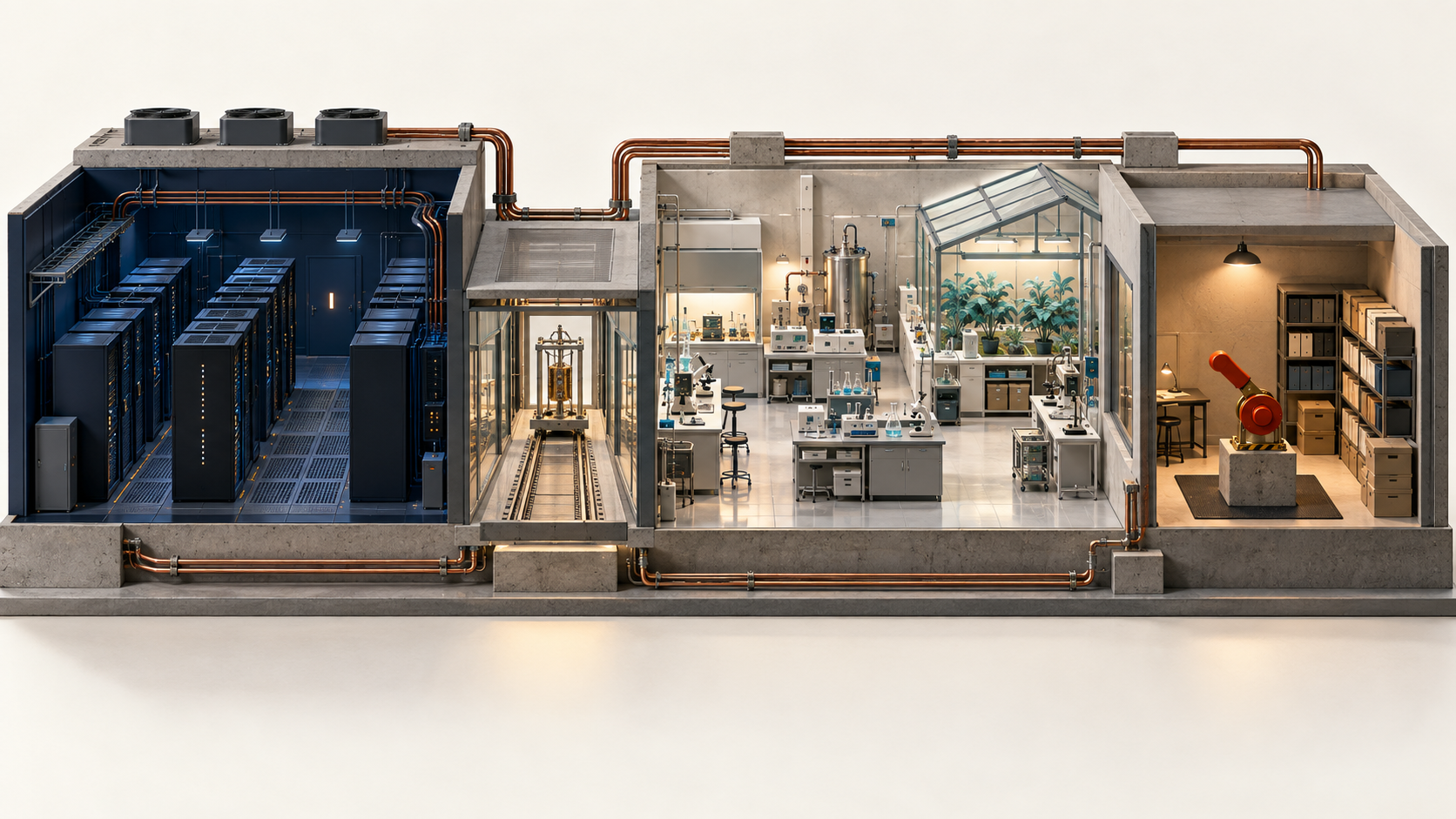
Two opposing forces could follow. Open models, shared tools, and cheaper experiments may let small teams attempt research they could not previously afford. Companies controlling large-scale compute, proprietary data, and validation facilities may accumulate advantages faster. Openness, market structure, and access to resources will influence which effect dominates.
Most people will not experience this as a feature called RSI. They may encounter cheaper professional software, an assistant that finishes a complicated assignment, or a materials candidate that reaches validation sooner. Those benefits depend on research improvements reaching actual products, rather than remaining laboratory scores.
The desirable outcome is cheaper, more reliable knowledge production with effective limits on how that capability is used. Who can ask the questions, access compute, validate results, and demand a halt will help determine its value.
Atria's records offer a concrete reminder. As AI takes over execution, human contributions can become less visible while remaining decisive: choosing directions, diagnosing failures, and judging acceptance. When the next company announces that its model built a successor, the revealing page will show how both versions performed the same round of research, what resources they consumed, and what happened to the attempts that failed.
Sources and further reading
Sources checked through September 14, 2026. Company disclosures and authors' reported results are not independent replications. Future scenarios and industry implications are analysis based on this evidence.
- Atria Dawn technical report; project website; related Xinzhiyuan reporting.
- Recursive Self-Aggregation Unlocks Deep Thinking in Large Language Models.
- Z.AI placement and convertible-bond announcement, September 13, 2026.
- Non-official social-media post, September 12, 2026. Cited only to identify the rumor, not as technical evidence.
- Google: Gemini 3.8 Flash and 3.8 Flash Cyber, September 2, 2026.
- Google DeepMind: AlphaEvolve, May 14, 2025.
- GPT-6 Astra system card, September 3, 2026.
- OpenAI: Research acceleration: The view inside OpenAI, September 6, 2026.
- How AI is transforming work at Anthropic, December 2, 2025.
- Grok 4.6 official training account, August 12, 2026.
- STaR; ReST: Beyond Human Data.
- Nature: AI models collapse when trained on recursively generated data, 2024.
- Darwin Gödel Machine.
- Dario Amodei: We Must Pace the Frontier, September 2026; CNN reporting establishing September 12 publication.
- Ynet on the pacing proposal and the Musk and Altman responses; Mediaite coverage of both responses, September 12, 2026.
- Anthropic Institute: When AI builds itself.
More from WayDigital
Continue through other published articles from the same publisher.
Comments
0 public responses
All visitors can read comments. Sign in to join the discussion.
Log in to comment