In this music puzzle, the note is the result of a decision
In this music puzzle, the note is the result of a decision
|


Before each key press, name the free tile and what it may uncover, then let the match play the next note.
In this music puzzle, the note is the result of a decision
The Barbican’s official calendar schedules the London Symphony Orchestra’s Half Six Fix concert for 6:30 p.m. on November 25, 2026. The page lists Vaughan Williams’s A Pastoral Symphony and Symphony No. 8, with Sir Antonio Pappano as conductor and presenter. It describes an introduced concert with screens in the hall. At the 10:00 a.m. Beijing editorial cutoff, the London performance was still later that day, so this is a preview prompt rather than a review.
A concert programme names the works before anyone hears them. It does not tell a listener which detail will matter once the orchestra begins. A puzzle can make the same distinction visible: information may be on the screen without being available as the next move.
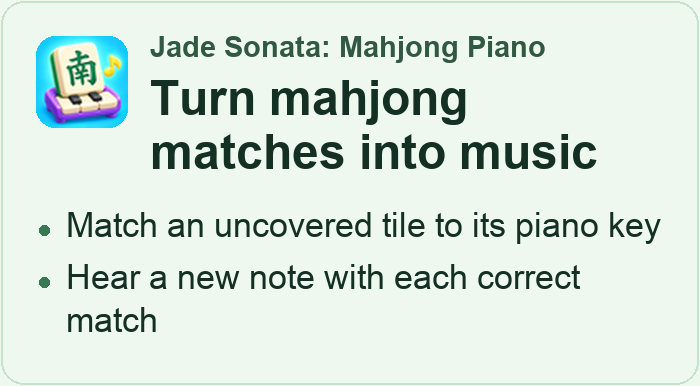
Our product portfolio includes Jade Sonata: Mahjong Piano. Its precise Google Play and App Store listings describe a board of layered mahjong tiles. An uncovered tile can be matched to a piano key carrying the same symbol; a successful match clears the tile and produces the next note. Covered tiles remain locked until the layer above them is removed. Both listings also say there is no timer or beat deadline.
That rule separates the game into two systems. The puzzle system asks, “Which tile is actually available, and what might this move uncover?” The music system answers after the choice by sounding the next note. The melody gives the move an audible consequence, but it does not dictate when the player must act.
Try making that separation explicit for five moves. Before touching a key, state one board reason: “This tile is free,” or “Clearing it exposes a shared cover.” After the match, name only the musical result: “The next note played.” If those statements blur together, pause and inspect the layer again. The exercise is about route reading, not replay timing, performance scoring, or whether the melody sounds better.
To try the two-step exercise, download Jade Sonata: Mahjong Piano on Google Play or download Jade Sonata: Mahjong Piano on the App Store. Play one short board and keep the decision separate from the note it produces.
Sources: Barbican’s official event listing; official Google Play listing; official App Store listing.
Comments
0 public responses
All visitors can read comments. Sign in to join the discussion.
Log in to comment