National Strength Cannot Substitute for Personal Growth
China’s progress opens a wider world, but collective achievement cannot do the work of personal growth. Opportunities must become competence, and greater power must come with responsibility. Respecting boundaries without an audience—and respecting others when one could take advantage—helps turn national influence into trust that people can rely on.
National Strength Cannot Substitute for Personal Growth
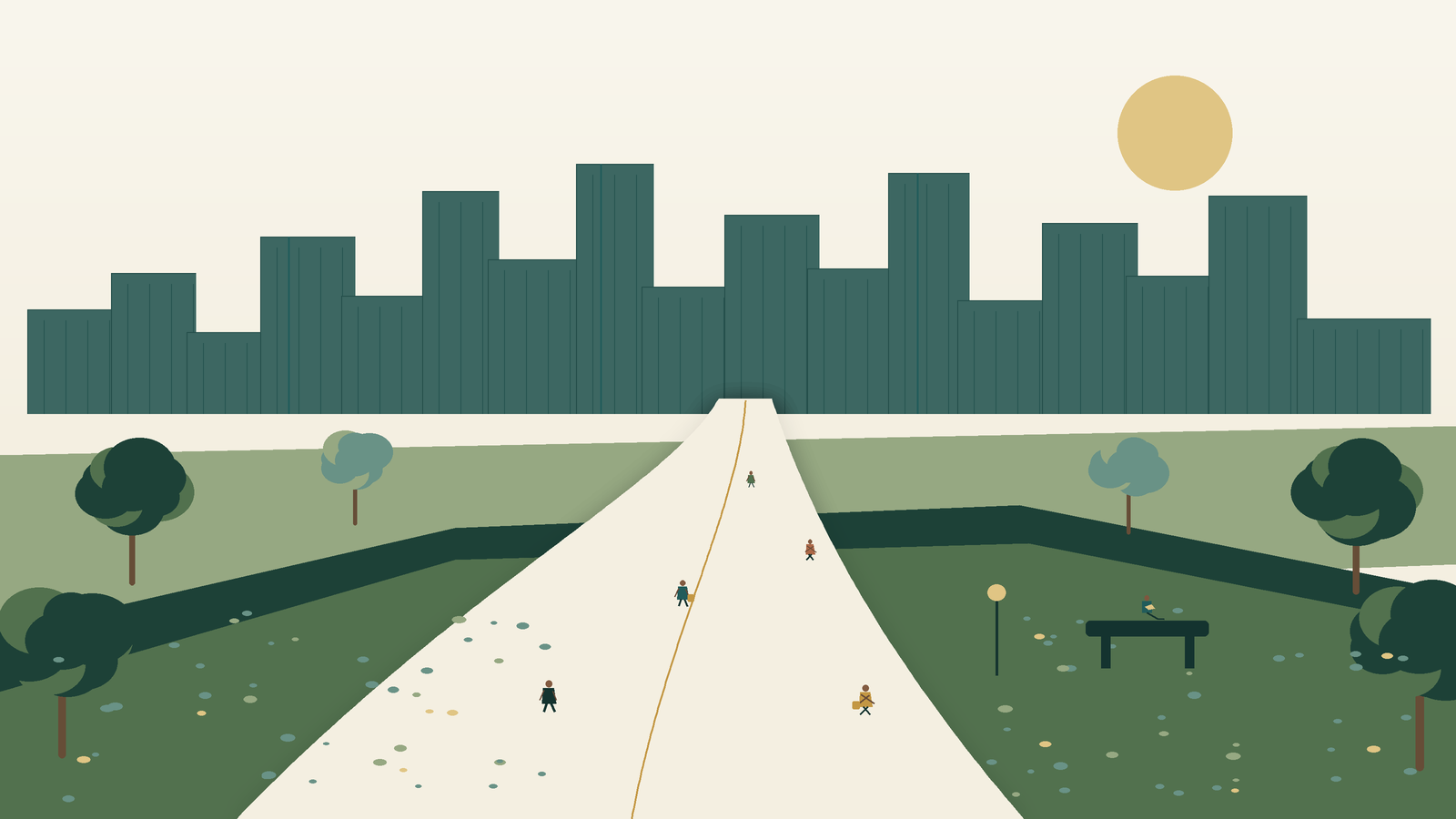
A flower in a park, a young tree, or a few stones laid beside a path may be worth very little. Someone taking them home might reason that a place this large will not miss such a small amount.
Yet the integrity of a public space depends on how people answer precisely that question. If something belongs to everyone, does that mean each person may take a private share before anyone objects?
This question comes before any anxiety about embarrassing China abroad. It reaches deeper, too. How a person treats something that is not theirs, especially when no one is watching, already reveals how they intend to live with the rest of the world.
Discussions of China’s place in a changing world often remain at the national level: industry, technology, international standing, and the future balance of competition. Citizens can rightly take satisfaction in progress and hope that it will bring better lives. But national progress does not complete the individual’s part of the journey. Development can create opportunities; it cannot learn on someone’s behalf, build their credibility, govern their desires, or give them a reliable sense of right and wrong. To treat national achievement as a personal credential while postponing one’s own growth is a quiet way of standing still.
The Country Can Open the Door; Each Person Still Has to Walk Through It
China’s development now has visible coordinates in the world. The World Intellectual Property Organization’s Global Innovation Index 2026 ranks China tenth and the United States third. In the same report’s innovation-cluster ranking, Shenzhen–Hong Kong–Guangzhou is first, Beijing fourth, and Shanghai–Suzhou sixth. These measures do not rank overall national power, much less personal character. They do show that China’s innovation activity is deeply engaged in competition at the global frontier. [1]
Who will lead in a particular field, and for how long, will still be decided through continued creation and problem-solving. Individuals do not need to wait for some future moment of national “surpassing” before preparing themselves.
Infrastructure, education, and industrial development can widen a person’s range of action. They can provide greater access to knowledge, markets, and potential partners. But when an opportunity arrives, other people will still ask practical questions. What can you actually do? Can your word be trusted? Will working with you require an extra layer of vigilance?
A road can be built without giving every traveler a sense of direction. A company can win an overseas contract without every manager knowing how to respect local employees. Digital tools can become more convenient without teaching their users to distinguish evidence from rumor or incitement. Individuals must develop these capacities for themselves.
Citizens should, of course, share in the benefits of public development. Education, health care, infrastructure, and basic protections are not shameful forms of dependence. The dependence worth resisting is something else: the belief that a stronger country removes the need to keep learning and changing, or that collective achievement is sufficient reason for others to respect us personally.
National strength can protect citizens and enlarge their opportunities. It cannot earn trust for each citizen one by one. Preparation means becoming capable of taking up an opportunity and accepting the responsibilities that come with it.
National achievement deserves pride. But moving directly from “what we possess together” to “what I have become” can bypass the work that only the individual can do. Excitement about a technological breakthrough is not the same as learning how research is conducted. Admiring the success of Chinese businesses does not mean one has learned to run a business honestly.
The satisfaction itself need not be dismissed. The question is whether it continues into action. After an encouraging piece of news, do we take greater care with the work in front of us? Are we more willing to learn what we do not understand? If our everyday choices remain unchanged, collective achievement has supplied a moment of exhilaration, not yet a personal capacity.
Personal confidence needs evidence of its own: a difficult task completed, a promise kept, an error corrected. Such experiences gradually teach a person what they can be responsible for. A grand collective identity should not become a way to evade a concrete task.
Public Property Is Not Property Without an Owner
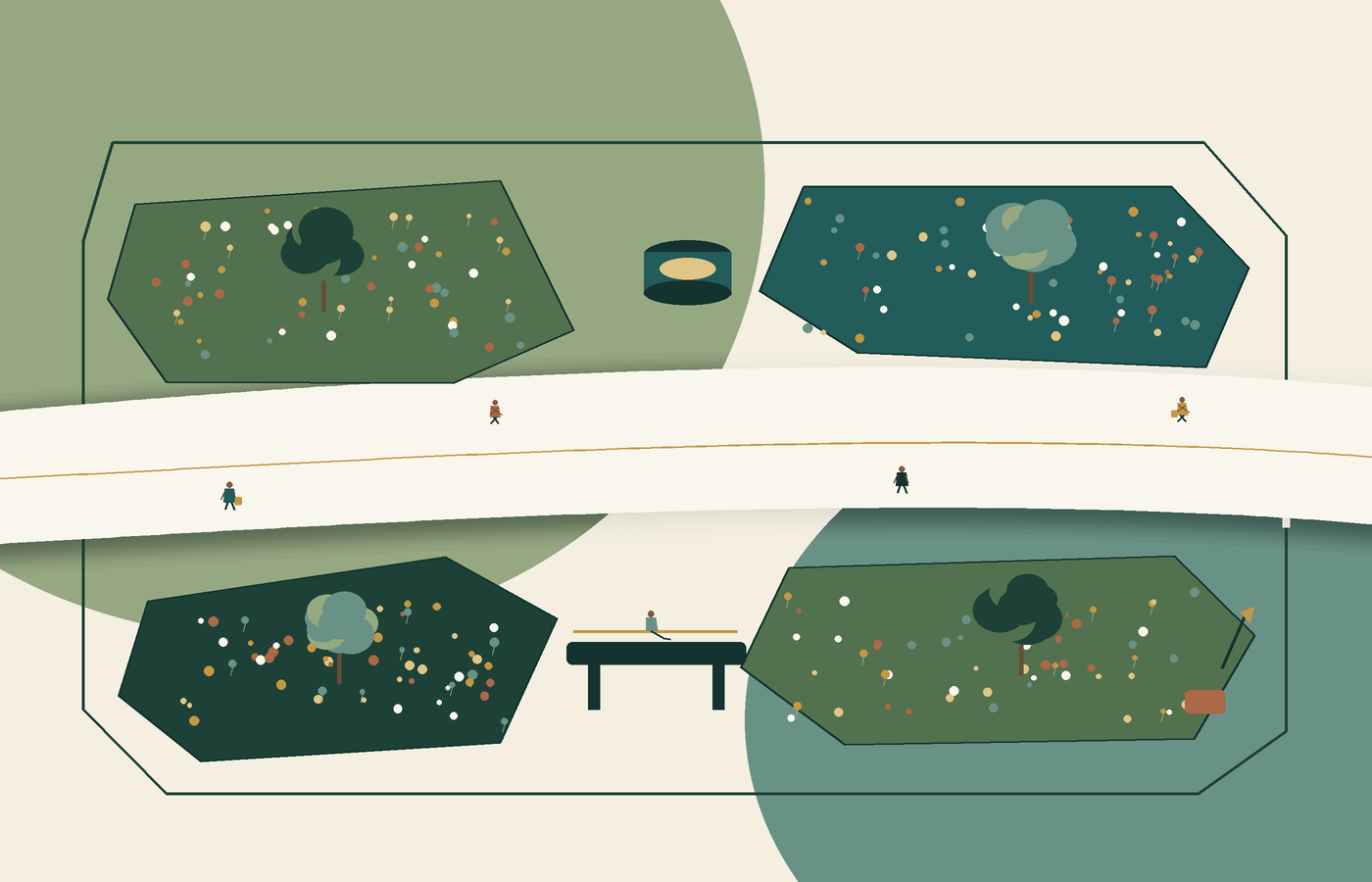
Consider the park again as an everyday hypothetical. Its flowers and trees expose a common boundary problem: what belongs to my household is protected, while taking a little from what belongs to the public seems harmless.
Once that logic is accepted, the costs are passed to everyone else. Later visitors encounter a diminished garden. Maintenance workers inherit another task. Public funds must cover another repair or replacement. The person who takes something keeps the benefit and distributes the cost among strangers.
That transfer is the problem. A stone’s low price does not make it reasonable.
The most basic demand of public ethics is to recognize the stranger’s share. Other people are also entitled to see an intact garden, use undamaged facilities, and inhabit spaces that are not casually encroached upon. Their rights do not disappear because they are absent and cannot stop us in the moment.
Nor can this be addressed simply by condemning individuals as uncivilized. Elinor Ostrom’s work on the governance of common resources showed that, under certain conditions, users can successfully manage shared property. Common resources are not inevitably doomed to neglect. [2]
The governance principles discussed in her Nobel lecture include clear boundaries, user participation in making rules, monitoring, graduated sanctions, and conflict-resolution mechanisms. They point to a broader lesson: dependable public life requires people who are willing to follow rules, but it also requires rules that can be understood, fairly implemented, and shaped with user participation. [3]
The park is an analogy here, not a claim that Ostrom’s research surveyed Chinese parks. It helps clarify why personal restraint and public governance should not be used as excuses against each other.
Administrators cannot blame every failure of management on the public. Individuals cannot treat a gap in management as a private entitlement. A person who sees a problem may document it, criticize it, and ask for improvement. Pulling up the flowers is not an improvement.
Public ethics therefore matter beyond whether someone appears respectable. If every stage of cooperation requires renewed vigilance, and every promise needs an extra check before it can be believed, participants must spend energy protecting themselves that could have gone into the work. Keeping one’s word and respecting boundaries leave room for cooperation.
One person’s broken promise does not determine a country’s destiny. Yet over sustained contact, product quality, the handling of commitments, and the treatment of local people all become reasons to accept or decline the next collaboration. National influence enters everyday life through these encounters. The individual’s responsibility is to leave behind trust that can withstand the next test.
Character Governs the Self When There Is No Audience
“Do not embarrass Chinese people” can sometimes restrain bad conduct. It is not the most durable foundation for character.
Someone who is polite only in front of foreigners, or willing to queue only when a camera is present, is practicing reputation management. When the audience leaves, the reason for restraint leaves with it.
A stronger reason is much simpler: I should not make other people carry the cost of my convenience. If I make a promise, I should make a serious effort to keep it. If I am wrong, I should acknowledge the mistake and try to repair the damage. These standards should not depend on the other person’s nationality, status, or ability to affect my reputation.
This is the practical meaning of self-discipline in solitude. No praise is coming; punishment may be impossible; still, a person knows what may be done and what should not be done.
Inner strength becomes visible in small choices. Can we let someone finish speaking during an argument? When we suffer a loss, can we separate the facts from our anger? If we discover that something we shared was false, can we retract it and explain the correction? An apology does not need a long attachment proving that the person apologizing was secretly right all along. Admitting ignorance need not be treated as a humiliation.
This discipline is not weakness. A person who can govern emotion has room to choose how to defend legitimate interests instead of being pulled along by every provocation.
A deeper capacity is being able to live, for a time, without an answer. Faced with a complicated problem, one need not rush toward the explanation that feels most comfortable. Hearing criticism also requires distinguishing a challenge to a particular practice from an attack on someone’s dignity. When the two are conflated, discussion can quickly turn into self-defense.
Confidence that depends on always being right, and on everyone else agreeing, leaves little room for learning. Acknowledging a technical limitation or a habit that needs to change does not erase existing achievements. Willingness to face what remains unfinished allows progress to continue.
Admiring a celebrity, supporting a team, or preferring a particular way of life is not in itself a moral problem. The problem begins when a person hands over their boundaries: spending beyond what they and their family can bear to prove loyalty, attacking people who have done them no harm to defend an idol, or surrendering factual judgment to avoid exclusion from a group.
Patriotism likewise cannot justify abandoning judgment. An unverified claim does not become true because it confirms what we hope to hear. Treating insults as courage, or every disagreement as hostility, does not improve our ability to understand the world.
What matters is preserving an independent mind amid excitement and pressure. Commitment can run deep, but it should not drown responsibility, evidence, or the dignity of other people.
Facing the World Requires Competence—and the Ability to Listen
International cooperation does not test attitude alone. A product has to work. Work has to meet a standard. Promises have to result in delivery. Knowledge has to withstand questions.
Engineers, teachers, business operators, and service workers need different professional skills, but the central requirement is similar: make your work something other people can rely on. Problems should be traceable. Limitations should be disclosed. A person should not casually promise what cannot be delivered.
These habits carry more weight than a polished introduction. A country’s reputation may help create market access or an initial opportunity. Concrete cooperation depends on concrete people continuing to justify that confidence.
Cultural cultivation makes a similar demand. It is not measured by how many classical poems someone can recite, what clothes they wear, or whether they speak fluent English. All of these may become forms of expression. None can substitute for understanding.
A person with cultural understanding should be able to explain why their own way of life took its present form and should also be willing to understand why another person’s life is different. Introducing China to a foreign friend need not mean reciting only the most glorious achievements. It can mean explaining how a local custom developed, how a family understands responsibility, or how a city negotiates tensions between the old and the new. Specificity and an honest recognition of difference give other people a way into an experience they do not share.
Article 3 of UNESCO’s Universal Declaration on Cultural Diversity understands development as extending beyond economic growth to a more satisfying intellectual, emotional, moral, and spiritual existence. Article 4 connects cultural diversity with respect for human dignity. [4]
That standard helps explain why cultural confidence can include learning from others. Knowledge of different histories and customs does not necessarily weaken one’s own identity. It can replace slogans with convictions tested through comparison and thought.
One tempting inference must be rejected: because a country advances, every citizen is therefore more advanced, and its culture and morality are naturally superior. Nationality proves no such thing. Knowledge must be acquired. Character must be practiced. Human dignity should not be allocated according to national rankings.
Tone matters in cross-cultural encounters. A person can be firm and can clearly refuse an unreasonable demand. Neither volume, humiliation, nor boasting is needed to prove strength. When a misunderstanding arises, establish the facts first. When a genuine difference remains, do not rush to explain the other person as stupid. Listening is not agreement. Respecting another person does not require surrendering one’s own interests.
Greater influence makes this distinction more important. Others may recognize our abilities without liking every one of our habits or accepting our answer to every question.
Defending One’s Interests Is Not the Same as Caring Only About Oneself
A call for personal responsibility must not become a demand that ordinary people always yield.
Seeking better pay, refusing unreasonable overtime, protecting personal privacy, and objecting to unfair treatment are legitimate exercises of self-interest. Moral character does not require someone to sacrifice every interest of their own.
Extreme selfishness crosses a different boundary. It treats other people as tools to be used up: I may break an agreement, but you must keep yours; I may seize an advantage, but you should be selfless; my freedom deserves protection, while your inconvenience does not matter.
When this double standard is praised as cleverness, public life becomes a system of mutual suspicion. People who follow rules must spend time defending themselves from those who do not. People who take their work seriously must repair the consequences of someone else’s broken word.
Any demand for better character should begin by limiting the misuse of one’s own advantages. People with authority should not abuse it. People with resources should not turn them into permission to humiliate others. People with specialized knowledge should not exploit an information gap to deceive those outside their field. Everyone can begin with whatever small convenience, leverage, or advantage they already hold.
Character is sometimes tested most clearly after a person gains power. Someone who asks a rule to protect them when they are vulnerable must still decide whether to honor that rule when they have the upper hand. When it is easy to overrule another person, will they still leave room for explanation, refusal, and the defense of legitimate interests?
Both moments matter. Together, they show whether a person believes in fairness or only wants fairness when it serves them. Greater capability expands what one can do; it also expands the need for voluntary restraint. Having a chance to take advantage and choosing not to treat it as an entitlement reveals more than compliance when no such chance exists.
Institutions have corresponding duties. Companies, platforms, schools, and public agencies cannot encourage honesty while rewarding falsification, or preach restraint while continually using extreme content to capture attention. Such arrangements can cancel the lessons that moral instruction is meant to teach.
Individuals should not wait for every institution to become perfect before improving themselves. Institutions should not wait for every person to become a saint before operating fairly.
This boundary is also a matter of dignity. A Chinese person should not be dismissed as unfit for the world because they are ordinary, not wealthy, or not fluent in a foreign language. Deception, encroachment, arrogance, and harm deserve criticism; a person’s living conditions and social identity do not. Nor should one individual be forced to bear humiliation on behalf of an entire country because someone else behaved badly.
It is possible to refuse to turn an individual failure into a portrait of a whole people while also refusing to excuse the specific failure.
Preparation Should Be Visible in Daily Life
Personal growth can easily become a cycle of buying courses, saving articles, and reposting maxims. The harder task is to carry an idea into the next decision.
Begin with a piece of work on which someone else depends. Check whether your promises are accurate and your delivery is reliable. Identify a weakness that repeatedly limits your work and practice until it improves, rather than chasing every new term. Learning a language, reading history, and studying other cultures are worthwhile when they deepen understanding and improve the quality of work—not merely when they add material for conversation.
Information habits are another place to begin. When a story produces immediate pride or anger, look for the original source. Separate its date, its facts, and the commentary around it. If it has not been verified, do not spread it yet. If a judgment proves wrong, a public correction builds more credibility than a silent deletion.
Preparation for public life need not begin with a large charitable project. Leave shared facilities intact for the next person. Use common spaces according to reasonable rules. When management genuinely fails, raise a factual objection. These actions have something in common: they recognize people outside one’s own circle of relationships.
A quieter practice is to set limits on desire and emotion. Entertainment cannot fulfill a duty of care that a person has already accepted. Group applause cannot decide whether a remark harms someone. Winning an argument online cannot maintain a relationship in the physical world.
These habits invite regular reflection. Did I make someone else carry a difficulty for my convenience today? Did I use identity, seniority, or collective prestige to avoid a test of my own competence? When I faced criticism, did I look for what could be improved, or did I think only about saving face?
Growth can also be judged from the other side of a relationship. Do the people who live or work with us have fewer unnecessary burdens to carry? Must family members repeatedly clean up after our decisions? Do colleagues always have to chase us for progress? Must strangers remain on guard to protect their legitimate share? These relationships can expose weaknesses that self-assessment misses.
Some growth earns little immediate applause but gives other people greater peace of mind. For an ordinary person, that is a contribution within reach: making the knowledge, resources, and opportunities one holds into something others can rely on.
Life need not become a permanent examination in self-reproach. People make mistakes, and good character includes leaving room for oneself and others to change. The reasonable demand is narrower: do not turn a mistake into an entitlement, and do not describe an unwillingness to change as proof that no change is needed.
Moving forward with the country is not a matter of waiting on deck to arrive. Individuals need their own measures of progress: a greater ability to solve problems, to work with strangers, and to endure disagreement without losing judgment or proportion.
The next visit to a park may again bring a person past flowers, young trees, and stones beside a path. No foreign observer is present; no camera records the choice. To look, continue along the path, and leave the garden intact for whoever comes next is a modest act. National development can build a park. Personal preparation helps keep it a place worth entering.
Sources
[1] World Intellectual Property Organization, Global Innovation Index 2026, overall ranking and innovation-cluster ranking. These rankings reflect the report’s innovation indicators; they are not rankings of comprehensive national power or personal character.
[2] Nobel Prize, “The Prize in Economic Sciences 2009 – Press Release,” on Elinor Ostrom’s research into the governance of common property.
[3] Elinor Ostrom, Beyond Markets and States: Polycentric Governance of Complex Economic Systems, Nobel Prize lecture slides, December 8, 2009; selected governance design principles on slide 22.
[4] UNESCO, Universal Declaration on Cultural Diversity, adopted November 2, 2001, Articles 3 and 4.
More from WayDigital
Continue through other published articles from the same publisher.
Comments
0 public responses
All visitors can read comments. Sign in to join the discussion.
Log in to comment