The 2016 South China Sea Crisis: An Award, Two Carrier Groups, and Why China Did Not Step Back
Why did the award trigger a crisis? Where did the carrier operation and Chinese exercise actually take place? A China-centred, evidence-led account separates strategic deterrence from later legend.
The 2016 South China Sea Crisis: An Award, Two Carrier Groups, and Why China Did Not Step Back
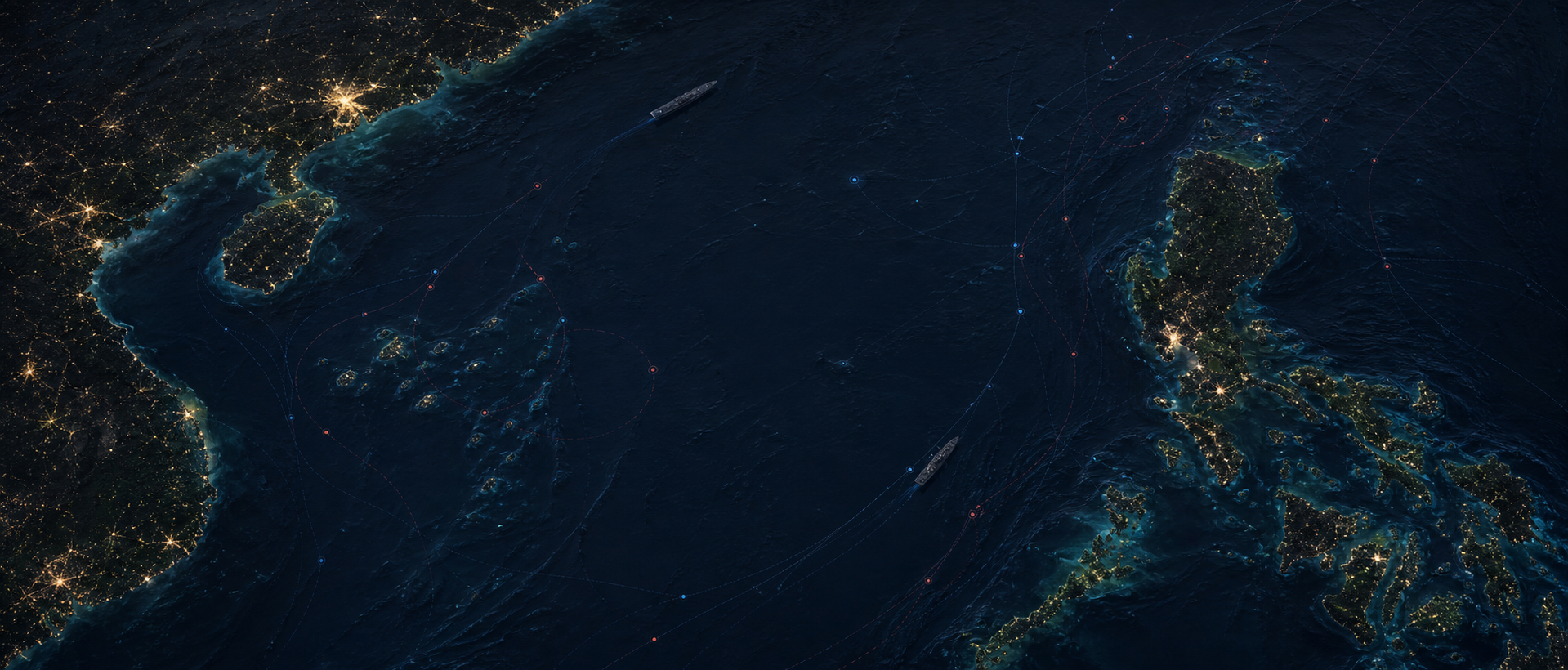
When the arbitral award was released on 12 July 2016, the South China Sea was not at war. But Beijing, Manila, and Washington all understood that this was more than a legal-news cycle.
China had just completed an exercise near the Paracel/Xisha area. Weeks earlier, the USS John C. Stennis and USS Ronald Reagan had conducted dual-carrier flight operations in the Philippine Sea. The Philippines had a new president, while the arbitration had been filed unilaterally by the Aquino III administration three and a half years before. Maritime power, alliance arrangements, island construction, and a ruling China had never participated in arrived at the same moment.
The episode is often reduced to two opposite myths. One says China suffered an unqualified defeat in an international court. The other says Chinese and American battle fleets confronted each other at close range in one body of water and U.S. carriers were forced away. Neither account does justice to the history.
The tribunal produced conclusions highly favourable to the Philippines on matters of the law of the sea. China rejected the proceeding’s jurisdiction, legality, and consequences. The United States maintained pressure through presence and freedom-of-navigation policy. China, through a refusal to yield politically, visible maritime and air activity, and the reopening of channels with Manila, prevented the award from becoming an immediate coercive arrangement imposed at sea.
China did not “win the arbitration.” It prevented the crisis from being defined and implemented for China by others.
This dispute did not begin in The Hague
The Philippines filed its notification of arbitration on 22 January 2013. Its political background lay in the 2012 Scarborough Shoal/Huangyan Island standoff and in longer-running disputes over features, fishing, and maritime rights.
The Aquino III government chose a careful legal route. It did not ask the tribunal to decide sovereignty over islands and reefs—territorial sovereignty was outside the tribunal’s authority. Instead it divided its submissions into the status of features, maritime entitlements, traditional fishing, environmental obligations, and asserted historic rights within the “nine-dash line.”
China refused participation from the start. Beijing’s argument was not simply that it disliked a likely outcome. It held that the dispute was inseparable from territorial sovereignty and maritime delimitation; that China’s 2006 declaration under UNCLOS Article 298 excluded compulsory procedures for matters including delimitation; and that China and the Philippines had committed to negotiations. From this viewpoint, breaking a sovereignty-and-delimitation dispute into technical law-of-the-sea questions did not change what the dispute really was.
That is why China’s formula—non-acceptance, non-participation, non-recognition, and non-implementation—was not invented after the award. China publicly rejected participation in 2013, issued a jurisdictional position paper in 2014, and rejected the tribunal’s 2015 jurisdiction and admissibility award.
One may disagree with China’s position, but describing it merely as “disregard for law” erases the central procedural question: why should a state that did not participate and believes a tribunal lacks jurisdiction accept conclusions produced after a complex sovereignty dispute was broken into separate legal claims?
What the tribunal decided—and why Beijing said it had crossed a line
The 12 July award did not decide sovereignty over any island, reef, or shoal. It did not formally delimit a maritime boundary between China and the Philippines. Those limits are often lost in popular retellings.
The tribunal addressed law-of-the-sea questions. It found no legal basis for historic rights exceeding UNCLOS entitlements within the nine-dash line; classified Scarborough Shoal as a feature generating a territorial sea but not an exclusive economic zone; found that the Spratly features addressed could not generate exclusive economic zones; and made findings adverse to China on fishing, petroleum activity, reclamation, and environmental harm.
For the Philippines, this was a major legal asset. China’s objection was more fundamental: the award assessed features, rights, and conduct one by one while avoiding the sovereignty premise on which they depended; it proceeded despite China’s explicit non-acceptance; and it had no mechanism capable of automatically enforcing a political settlement in a contested region.
It is not accurate to call the tribunal a body whose members merely voted according to national “sides”; the public record does not support that claim. A more defensible Chinese critique is that the proceeding rested on unilateral initiation by the Philippines, that jurisdiction was exactly what China disputed, and that an award neither resolving sovereignty nor accepted by one party cannot naturally replace negotiation or automatically rewrite operational reality.
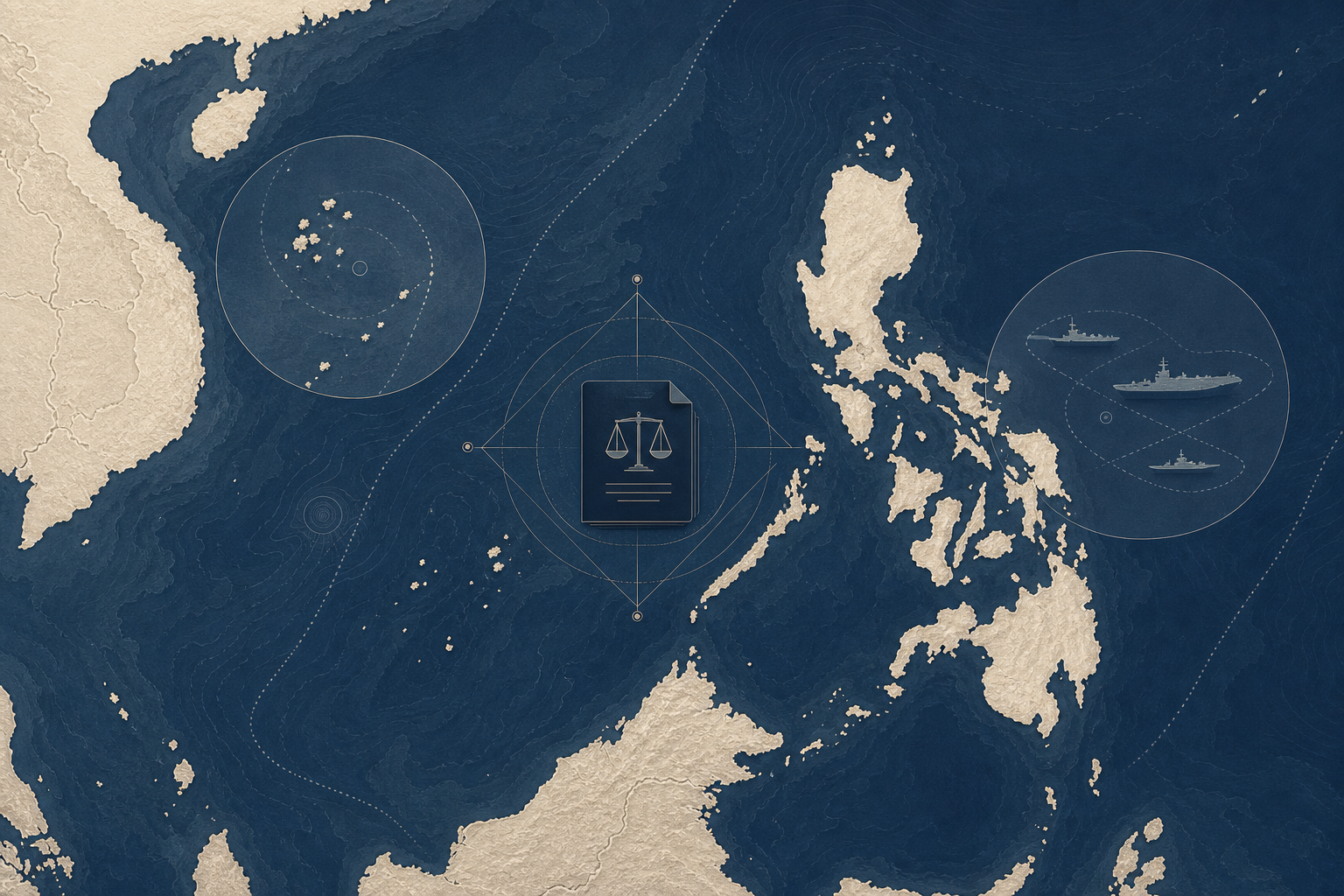
Why Washington put two carrier groups in the western Pacific
Arbitration was only one source of pressure. By the mid-2010s, the U.S. rebalance to Asia had placed the South China Sea at the intersection of alliance credibility, maritime access, and strategic competition with China. The U.S.–Philippines Enhanced Defense Cooperation Agreement was being advanced in 2016, while U.S. naval presence in the western Pacific remained prominent.
On 18 June, the U.S. Seventh Fleet announced dual-carrier flight operations by the Stennis and Reagan in the Philippine Sea. The geography matters: the Philippine Sea is east of the Philippines. This was not a confirmed face-to-face entry by two carriers into the South China Sea. It was nevertheless a strategic signal before the award that the United States could concentrate advanced air and naval power and visibly reassure allies and partners.
China did not wait in The Hague for the outcome. From 5 to 11 July, it held exercises in waters south of Hainan and near the Paracel/Xisha area, with a navigation warning for the designated zone. Chinese authorities described the activity as annual training, but the timing carried its own message: an approaching ruling would not make China suspend operations near waters and features it claims, or accept a sequence in which public legal pressure was followed by military presence.
The dangerous week: distinguish evidence from legend
The atmosphere was tense. Media reports, online narratives, and later videos often turn the period into a story of imminent war. China did repeatedly stress sovereignty and oppose what it saw as external military intervention. Publicly verifiable material confirms the carrier operation, Chinese exercises and navigation warnings, diplomatic statements, and ongoing maritime and air activity.
But history should not be filled with unverified battle reports. Specific claims that China fired a DF-21D at a carrier on 12 July, that a public release of exact carrier coordinates triggered an emergency U.S. withdrawal, that a captain bypassed an attack order, or that troops submitted wills and received body bags lack independently verifiable Chinese or U.S. official records or reliable primary evidence. Repeating them as fact weakens, rather than strengthens, analysis of China’s real conduct.
The claim that the two U.S. carriers entered the South China Sea and were “driven out” requires the same correction. The U.S. Navy’s announcement placed the 18 June operation in the Philippine Sea; China’s July exercise was in the Hainan–Paracel/Xisha direction. They were deterrent signals in one crisis, not documented main-fleet lines confronting each other at a single coordinate. There is no credible public record of a July 2016 U.S.–China main-fleet encounter resolved by fire-control radar, collision, or an acknowledged withdrawal.
That correction does not diminish the crisis. It shows how both sides avoided pushing a show of force into a moment where combat became unavoidable. China did not possess a U.S.-style global power-projection fleet, but it could connect near-seas defence, island facilities, land-based aviation, missile deterrence, and exercises into a clear message: no one should expect a legal award plus naval display to compel China’s acceptance of a new arrangement.
Why China believed it had to hold its position
Beijing’s concern was never just a document. Apparent acquiescence or a forced change in posture during the award’s high-pressure window could have affected its negotiating position, regional perceptions, and strategic depth.
It could have narrowed China’s room to articulate its claims in future negotiations. It could have shaped the calculations of other regional claimants and outside powers about which side could sustain a presence. And it could have treated island facilities, routes, and the defence depth associated with Hainan and the western Pacific as isolated questions to be handled one by one, producing a wider strategic disadvantage.
This does not make every military step legitimate, nor does it make war desirable. Strategic restraint means refusing an externally imposed political result while not being drawn into a war in which an opponent holds advantages and the costs would be borne by one’s own country.
Why Manila did not turn the award into continuing confrontation
The ruling arrived just after Rodrigo Duterte took office. His government did not immediately convert the legal result into forceful maritime enforcement. It first adopted a restrained public line, then reopened contact with China. By autumn 2016, China–Philippines ties had eased and Filipino access around Scarborough Shoal had improved.
The point is not that the Philippines abandoned the award as a diplomatic resource. It is that a legal text does not execute itself. Manila had to weigh economic ties, fishing livelihoods, domestic politics, and the costs of direct dealings with China. U.S. support for the award did not mean the United States would turn every Philippine claim into a military fact.
From a Chinese viewpoint, the central gain was not merely rejecting the award. It was preventing an “arbitration–alliance–on-scene enforcement” chain from becoming irreversible, while restoring a space for bilateral engagement.
The actual scorecard
If the question is whom the tribunal supported, the answer is straightforward: the Philippines received a favourable award.
If the question is who held strategic ground in July 2016, the answer is more complicated. China did not recognize the award, was not forced into a substantive change in its maritime posture during the crisis window, and avoided an all-out military collision. The United States retained its deployment and operational capacity, but did not compel China to accept the award. The Philippines received legal leverage but did not convert it immediately into control or enforcement.
China’s advantage rested on three things: holding a political line against acceptance of the award; using visible, integrated deterrence to stop the crisis becoming unilateral coercion; and reopening diplomatic space. That is not the legend that a single missile frightened a carrier away. It is a harder and more credible account of how a state under legal, military, and diplomatic pressure refused to let its opponents combine those elements into a binding fait accompli.
No single paper settled the South China Sea in 2016. The award did not automatically change the balance at sea. Carrier presence did not automatically change China’s position. China’s rejection did not end the dispute. The enduring lesson is that the issue cannot be settled by a unilateral filing, a single award, or a one-time fleet demonstration. It still requires a political arrangement capable of addressing history, facts, the full application of international law, and the interests of directly concerned parties.
Sources
- PRC Ministry of Foreign Affairs, statement of 12 July 2016: https://www.mfa.gov.cn/eng/zy/gb/202405/t20240531_11367334.html
- PRC position paper on jurisdiction: https://www.fmprc.gov.cn/nanhai/eng/snhwtlcwj_1/
- Permanent Court of Arbitration, case material: https://pca-cpa.org/en/cases/7/
- U.S. Seventh Fleet, dual-carrier operations, 18 June 2016: https://www.c7f.navy.mil/Media/News/Display/Article/802953/two-carrier-strike-groups-double-down-in-western-pacific/
- Chinese report on the July 2016 exercise: https://english.cctv.com/2016/07/05/VIDEx4XFIhyIHexmv26KvrCu160705.shtml
- U.S. Department of State, 12 July 2016 statement: https://2009-2017.state.gov/r/pa/prs/ps/2016/07/259587.htm
Editorial visuals are AI-generated explanatory illustrations, not contemporaneous photographs or operational tracks.
Comments
0 public responses
All visitors can read comments. Sign in to join the discussion.
Log in to comment