When AI Stops Answering and Starts Acting: Zuckerberg's Bet on Muse
Muse is designed as a persistent machine that acts for an individual. The real contest extends beyond model capability to permissions, privacy, distribution, transactions, and whether the agent knows when to stop.

1. Guest Background
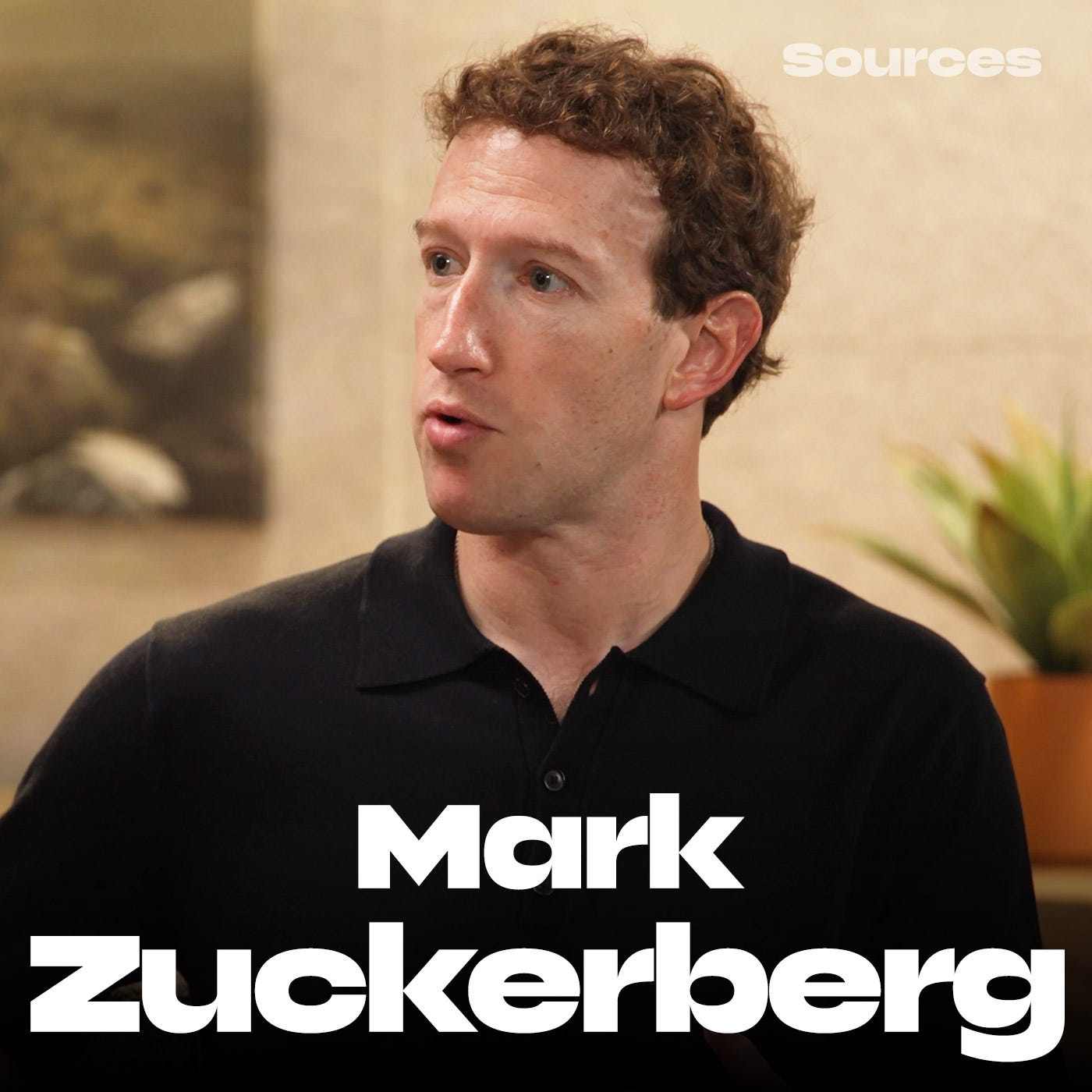
Mark Zuckerberg is not commenting from the sidelines. He is Meta's founder, chairman, and chief executive officer, and Meta's own leadership description says he sets the company's overall direction and product strategy. Muse, frontier models, smart glasses, data centers, and youth safety all sit inside businesses to which he is committing capital, people, and corporate reputation. That makes his account unusually useful, but it also gives it a clear perspective: these are the arguments of the executive placing the bet. They should be treated seriously without being mistaken for independent proof that the bet will work.
Interviewer Alex Heath brings a different kind of proximity. He started Sources in September 2025 after more than a decade covering technology at The Verge, The Information, and Business Insider. His questions keep pulling the conversation away from launch language and toward operational details. Who pays for Muse? What can Meta see? What happens when an agent handles a password or payment? How do data centers earn local consent? What did Meta misunderstand after Llama 4?
The verified Sources Podcast program runs 4,210 seconds, or about seventy minutes. It does not isolate Muse as a single product feature. It places the agent inside Meta's larger AI program: how advanced capability should be distributed, where open source fits, whether a cloud-based personal machine can remain confidential, how Meta's consumer and small-business reach becomes an advantage, and how government should respond when the risk profile changes faster than legislation.
The consequential claim is a chain rather than a feature list. Give individuals stronger tools; let those tools keep acting on long-term goals; allow the resulting work to create or save economic value; then build Meta's business around a small share of that value. Every link creates a counterpressure. More context makes the agent more useful and more dangerous. Wider distribution can broaden opportunity and enlarge the blast radius of a design mistake. Heath's role in the conversation is to keep those pressures visible.
2. What the Episode Covers
Zuckerberg begins with three principles for Meta's AI program. Capability should empower individuals. AI should help people invent new things rather than serve only as a machine for automating existing labor. Safety should rest on checks and balances and a distribution of power, not simply on restricting access to the strongest systems. This is more than product positioning for Muse. It is his explanation for why Meta wants to build frontier models, support an open ecosystem, and ship AI through mass-market products at the same time.
That philosophy quickly meets physical infrastructure. When Heath asks about local resistance to data centers, Zuckerberg distinguishes operators that plan to remain in a community, pay taxes, hire workers, and invest locally from speculative developers that secure land and electricity in order to resell a project. He points to teacher bonuses and training for fiber technicians, electricians, and advanced carpenters as examples of the benefits Meta says it can bring. The point is easy to miss in a software discussion: a personal agent depends on power, land, skilled labor, and a durable social license to operate.
Muse itself is defined much more aggressively than a chatbot. Zuckerberg describes a persistent machine for an individual, with a virtual computer, tools, service logins, and memory. Instead of receiving one prompt and returning one answer, it can keep researching overnight, write reflections into memory, resume a project the next day, manipulate an environment, observe results, and revise its plan. The user gives it a goal, not merely a question.
His examples are deliberately domestic and personal. Muse can propose a weekly baking project for his three-year-old daughter and prepare an Instacart order; it can pursue a hiking permit; it can connect a camera to an MMA coaching workflow. Early testers used it for homeschooling support and travel planning. The failed cake-pop suggestion matters because it shows the missing capability as clearly as the successful demonstrations do. A long-running agent must learn that a result was unsuitable, not merely execute a sequence of clicks.
The proposed pricing follows the distribution thesis. Zuckerberg says the early service will include roughly 100 million tokens per week and virtual-machine capacity at no charge, with subscription options also available. Longer term, if Muse helps a small business sell a product, completes a transaction, or saves a user money, Meta might take a very small share of the value or receive payment from a participating merchant. That design tries to avoid making a high subscription price the gate to adoption. It remains a proposal: the interview does not resolve attribution, fee transparency, platform bias, or exit rights.
Security is the product's hardest dependency. A useful Muse would encounter advertising systems, messages, email, health information, payment credentials, and other intimate context. Meta's proposed stack includes confidential virtual machines, a secure credential store, one-time card numbers, sentinel agents monitoring traffic, human approval for sensitive actions, and connectors that begin with read-only or otherwise minimal privileges. No single component can make the system trustworthy. Trust depends on whether the layers fail safely together and whether the user can see and stop the failure.
3. Core Views: Reasoning, Examples, and Limits
The interview's strongest argument is that concentrated control of powerful AI can itself be a safety hazard. Zuckerberg worries about a small number of laboratories possessing the capability and deciding who may use it. He reaches for the history of open-source software and cybersecurity: systems that can be inspected are easier to scrutinize, defenders gain access to tools, and multiple actors can check one another's power. The argument has force because denying ordinary organizations access does not make attackers disappear. It can simply leave smaller defenders with weaker equipment.
Broad access, however, is not the same thing as demonstrated safety. Openness can increase scrutiny and increase availability at the same time. The same capability can harden a network or attack it. The episode does not provide evidence sufficient to prove that the net effect will be positive across every domain. Zuckerberg also states a practical limit: Meta will do both open and closed work and is not promising to release every advanced capability. Open source is therefore best understood here as a value, a competitive strategy, and an ecosystem strategy—not as an unconditional rule.
He makes a similarly qualified market prediction. Personal agents may not be purely winner-take-all, but the number of organizations able to perform state-of-the-art work will remain limited, and usage will likely follow a power-law distribution. Meta's advantage is broader than model quality. It has consumer distribution, relationships with a vast number of small businesses, social context, and infrastructure across the stack. If Muse becomes reliable, Meta can place it in front of hundreds of millions and eventually perhaps billions of people. That reach is an asset and a liability: a permission mistake inside a deeply personal agent becomes more consequential when multiplied across a global network.
Zuckerberg's account of Meta's own error is more informative than the launch slogans. He says the company assumed that its strength in recommendation, advertising, and content-integrity machine learning would transfer more directly to frontier LLM scaling. After Llama 4, Meta concluded that the trajectory was not good enough. The response was to rebuild the lab around smaller teams and higher talent density, with Zuckerberg spending substantial personal time recruiting. The lesson is organizational. Frontier-model research is not conventional machine learning made larger; it changes the research questions, the collaboration surface, and the speed at which technical leadership has to decide.
The conversation also covers a smaller pretraining effort codenamed Avocado, a larger model codenamed Watermelon, and much heavier compute investment. Attribution matters. Claims about pretraining progress, future post-training gains, and release timing are Zuckerberg's description of internal work, not independent evaluation. Model codenames and gigawatt-scale clusters establish the intensity of Meta's investment. They do not substitute for measurements of reliability, latency, cost, controllability, or safety in the hands of users.
Two capabilities stand out as requirements for a useful personal agent. The first is coding. Many goals that do not initially look like programming tasks eventually require a script, a visual-processing pipeline, a temporary application, or an integration. The second is discretion. An agent may know that its user is pregnant, allergic, ill, or under financial pressure. When it orders dinner or negotiates with a service, it should disclose only what the task requires. Knowing sensitive facts is easier than using them without leaking them.
Zuckerberg's safety position is a moving system rather than a single regulatory framework. It combines safeguards during training, clear behavioral boundaries, broad checks and balances, and frequent communication with government because the dominant risk may change—from cybersecurity now to a biological concern later. That is a real problem for rigid rules, but rapid change cannot become an excuse for weak accountability. A more durable division is between stable obligations such as auditability, incident reporting, responsibility, and permission boundaries, and technical standards that can be updated frequently.
Smart glasses and teen safety bring the same conflict into consumer products. Zuckerberg points to recording indicators, anti-tampering measures, age-appropriate controls, and parental tools. Heath presses the unresolved social question: why do products still feel invasive when they move from enthusiasts into ordinary public spaces? The answer is not only whether the buyer saw an explanation. A person standing near a camera did not accept the product's terms. Meta may need to explain the design repeatedly, but society may also demand a higher threshold than the minimum visible indicator. Youth policy has a parallel limit. Restrictions and stronger controls may be justified, but their effects, scope, and consistent application across competing services still require evidence.
4. Learning and Application
The practical way to evaluate a personal agent is to stop staring at benchmark deltas and assign it a bounded task that lasts several hours and crosses two or three tools. Can it preserve state, explain its plan, expose a failure, recover after interruption, and pause for approval before a consequential action? Long-horizon execution, environment control, memory, credential handling, least-privilege access, and approval boundaries are the foundation of this category. Raw model intelligence is only one component.
Permissions should expand in stages. Begin with research, organization, and drafting. Move next to read-only access for a calendar or mailbox. Sending, purchasing, publishing, and changing an account should come later. At every stage, the user needs a readable log showing what the agent accessed, what it disclosed, why it requested a new permission, and how to revoke it. If a product works only after the user selects “allow everything,” the convenience is being financed by unauditable trust.
Outcome-based pricing also deserves inspection. Taking a small share of value can sound fairer than charging everyone a large fixed subscription, but only if value attribution is understandable, fees are visible, cancellation is easy, and the agent is not nudged toward merchants that pay the platform more. Muse's proposed model is a useful hypothesis, not evidence that the economics already work. A business buyer should ask who owns a refund, how an erroneous purchase is handled, and whether recommendations are ranked for the user or for the platform's commission.
Privacy cannot be a launch checklist because an agent becomes more valuable as it gains more context. Confidential virtual machines, credential stores, and sentinel agents are meaningful architectural ideas. They still leave questions that require testable answers: Who controls the keys? How are software updates attested? How long are logs retained? Who is alerted after prompt injection? What can the model provider observe? Any promise that “even the platform cannot see” should map to a technical boundary and an independent audit, not remain a line in a keynote.
Finally, distribution and safety do not form an automatic equation. Giving capability to more people can reduce monopoly power and increase scrutiny, while also enlarging the attack surface. The safer adoption pattern is to begin with reversible work: outputs can be inspected, permissions can be revoked, losses are capped, and failure does not immediately affect another person. Autonomy can expand after the system has been observed failing in the real environment. The revealing moment for a 24/7 agent is not when everything goes right. It is when an instruction is ambiguous, a page is malicious, or the agent's commercial incentive conflicts with the user's interest—and the agent decides whether to stop.
Source
- Original episode: Mark Zuckerberg on how Meta's Muse AI agent will make people money
More from WayDigital
Continue through other published articles from the same publisher.
Comments
0 public responses
All visitors can read comments. Sign in to join the discussion.
Log in to comment